Nanocarrier-Enabled GPCR Therapeutics for Oncology, Neurological, and Cardiovascular Disorders
Keywords:
- GPCRs, nanocarriers, drug delivery, liposomes, polymeric nanoparticles, precision medicine, targeted therapy
Abstract
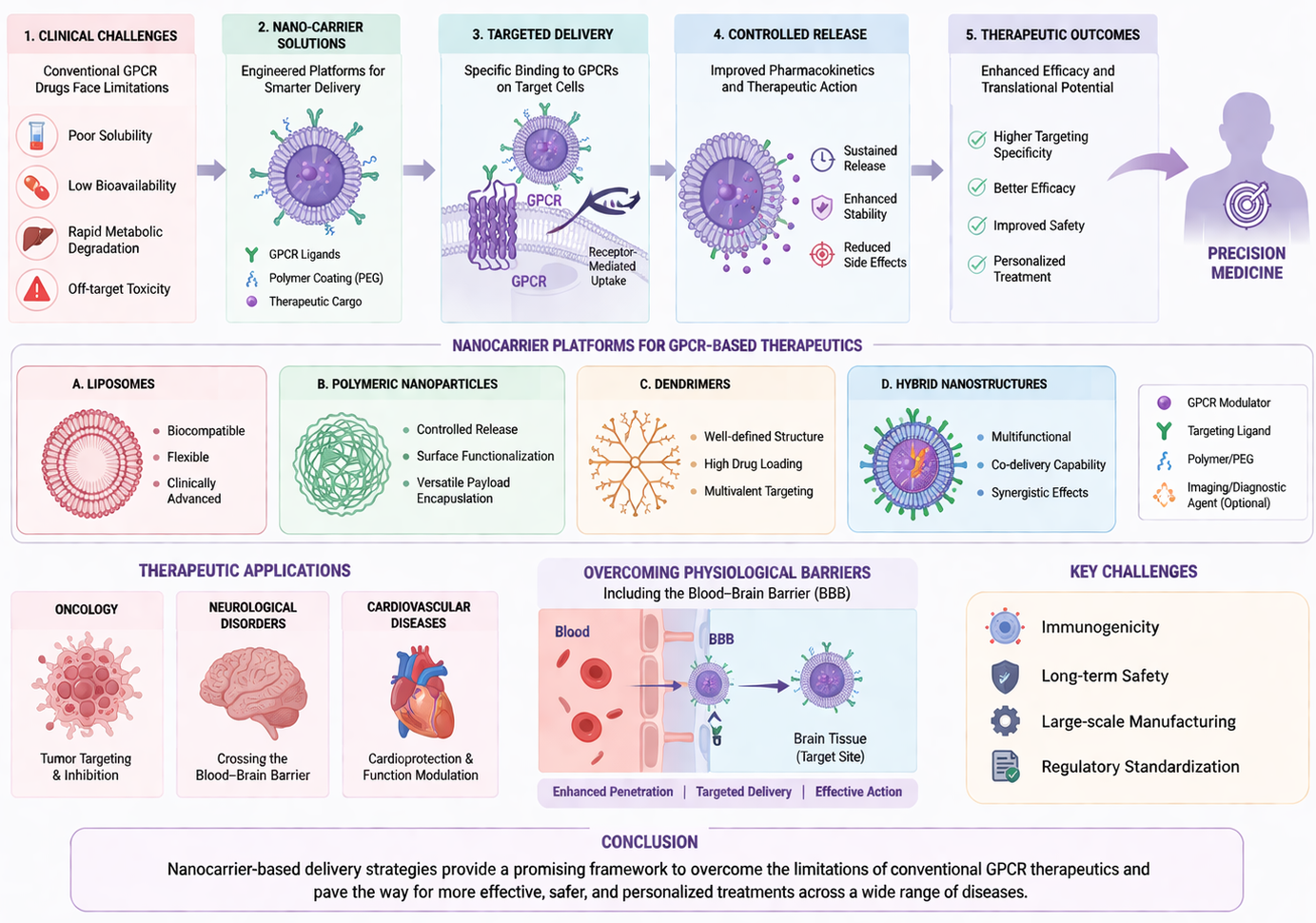
G protein–coupled receptors (GPCRs) constitute one of the largest and most pharmacologically significant classes of membrane proteins, regulating a broad spectrum of physiological processes and contributing to the pathogenesis of numerous diseases. Despite their central importance in therapeutic development, conventional GPCR-targeted drugs frequently encounter challenges such as poor solubility, inadequate bioavailability, rapid metabolic degradation, and off-target toxicity, which collectively limit their clinical effectiveness and therapeutic precision. This review aims to critically assess nanocarrier-based drug delivery approaches designed to enhance the targeting specificity, therapeutic efficacy, and translational potential of GPCR-modulating agents. A comprehensive analysis of peer-reviewed literature was conducted, focusing on GPCR structural biology, receptor signalling pathways, and advanced nanocarrier platforms, including liposomes, polymeric nanoparticles, dendrimers, and hybrid nanostructures. Emphasis was placed on preclinical investigations and early-phase clinical studies exploring GPCR-targeted nanomedicine strategies. Nanocarrier systems demonstrated significant improvements in pharmacokinetic and pharmacodynamic profiles by enabling controlled and sustained drug release, enhancing ligand stability, and facilitating targeted delivery to specific tissues. These systems also improved penetration across physiological barriers, including the blood–brain barrier, and supported the co-delivery of multiple therapeutic agents. Applications across oncology, neurological, and cardiovascular disorders highlight the broad therapeutic relevance of nanocarrier-assisted GPCR modulation. Nevertheless, challenges related to immunogenicity, long-term safety, large-scale manufacturing, and regulatory standardization remain critical considerations. Overall, nanocarrier-based delivery strategies offer a promising framework to overcome the limitations of conventional GPCR therapeutics and support the advancement of precision and personalized medicine.