Next-Generation CAR-NK Immunotherapy for Myeloid Malignancies: From Target Discovery to Clinical Translation
Keywords:
- Chimeric antigen receptor-natural killer cells (CAR-NK); Acute myeloid leukemia (AML); Myeloid malignancies; Immunotherapy; CD33; CD123; Hematopoietic stem cell transplantation; Induced pluripotent stem cells (iPSCs); Tumor microenvironment; Off-the-shelf cellular therapy.
Abstract
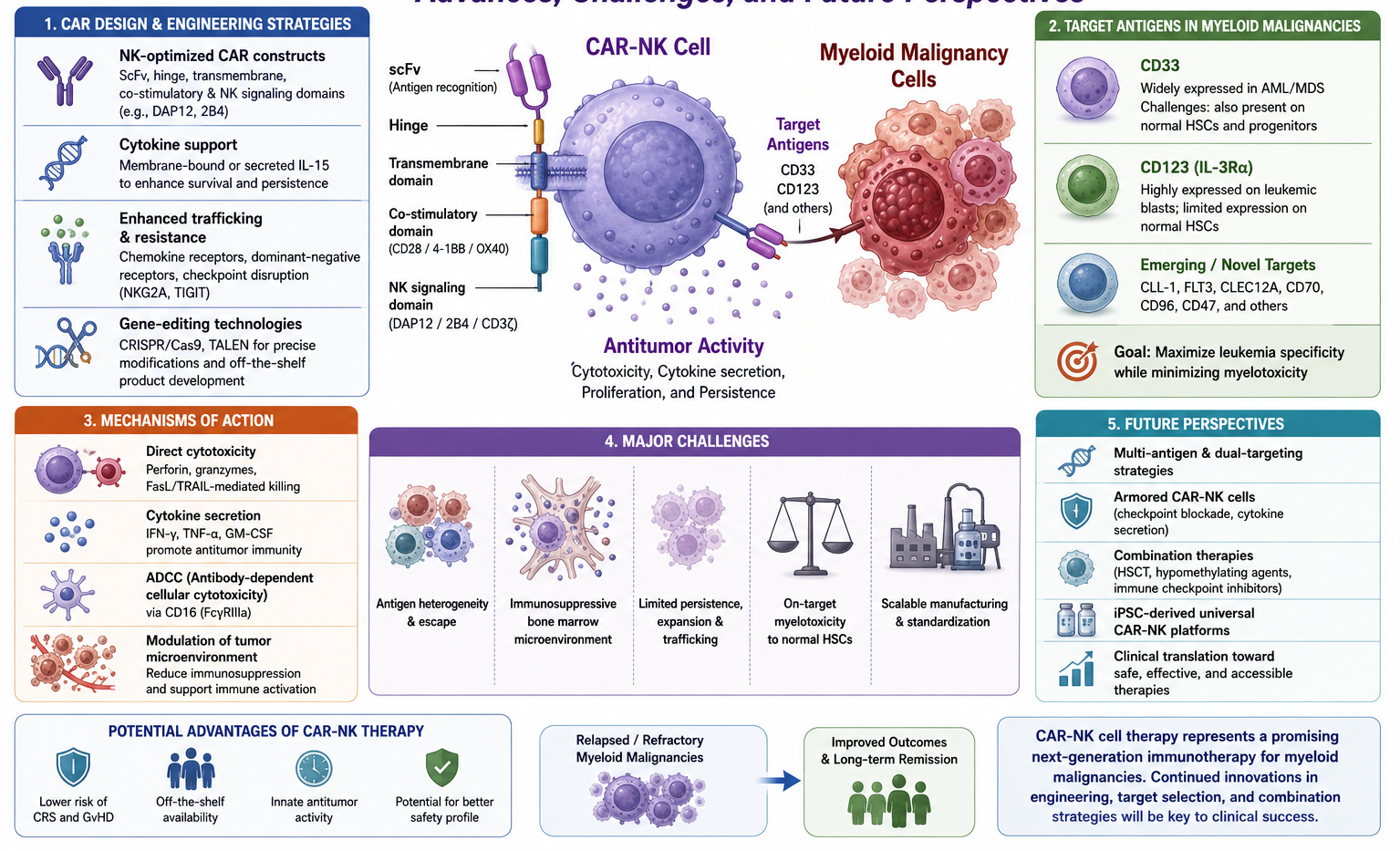
Chimeric antigen receptor-engineered natural killer (CAR-NK) cell therapy has emerged as a promising next-generation immunotherapeutic approach for the treatment of myeloid malignancies, particularly acute myeloid leukemia (AML), myelodysplastic syndromes (MDS), and related myeloproliferative neoplasms. Despite significant advances in conventional chemotherapy, targeted therapies, and hematopoietic stem cell transplantation (HSCT), long-term outcomes remain unsatisfactory for many patients, especially those with relapsed or refractory disease. While CAR-T cell therapies have revolutionized the management of B-cell malignancies, their application in myeloid cancers has been limited by target antigen overlap with normal hematopoietic tissues, severe toxicities, and manufacturing complexities. CAR-NK cells offer several potential advantages, including potent innate antitumor activity, lower risk of cytokine release syndrome and graft-versus-host disease, and the feasibility of developing universal “off-the-shelf” cellular products. Recent preclinical studies and early-phase clinical trials have demonstrated encouraging safety profiles and preliminary efficacy of CAR-NK platforms targeting key myeloid antigens such as CD33 and CD123. Furthermore, advances in induced pluripotent stem cell (iPSC)-derived NK cells, gene-editing technologies, and cytokine-enhanced CAR constructs have accelerated the clinical translation of this therapeutic modality. However, several challenges continue to impede widespread clinical implementation. These include antigen heterogeneity, on-target myelotoxicity affecting normal hematopoietic stem and progenitor cells, limited in vivo persistence and trafficking of NK cells, immunosuppressive bone marrow microenvironments, and constraints on scalable manufacturing. Innovative engineering strategies, including multi-antigen targeting, armored CAR constructs, cytokine support systems, checkpoint inhibition, and combination therapies, are being actively explored to overcome these barriers. This review provides a comprehensive overview of NK-cell biology relevant to CAR engineering, summarizes current preclinical and clinical developments in CAR-NK therapy for myeloid malignancies, and critically examines the major translational challenges facing the field. Finally, it highlights emerging technological innovations and future research priorities required to establish CAR-NK therapy as a safe, effective, and widely accessible treatment option for patients with myeloid cancers.