Molecular Pharmacology of Ion Channels: Implications for Pain and Neurological Disorders
DOI:
https://doi.org/10.64474/3107-6726.Vol2.Issue1.6Keywords:
- Ion Channels; Molecular Pharmacology; Neuropathic Pain; Voltage-Gated Sodium Channels; Calcium Channels; Potassium Channels; TRP Channels; Asics; Neuronal Excitability; Channelopathies; Analgesic Drug Development; Neurological Disorders; Precision Medicine; Ion-Channel Modulators
Abstract
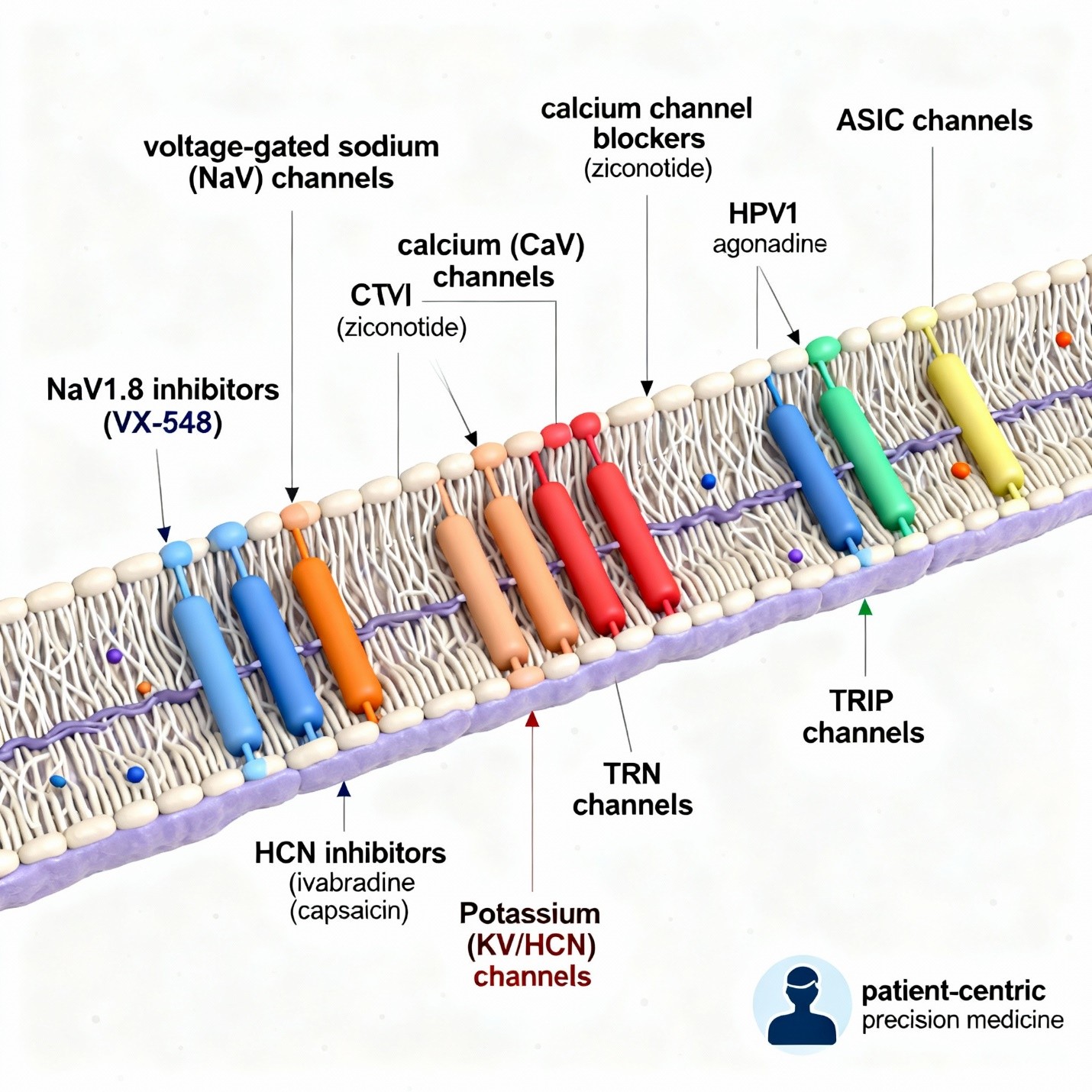
Ion channels are central to neuronal excitability and synaptic communication, tightly regulating the flow of sodium, potassium, calcium, and chloride ions across cellular membranes. Their dysfunction—arising from genetic mutations, post-translational modifications, or cellular stress—contributes to the pathogenesis of neuropathic pain, epilepsy, migraine, and other neurological disorders. This review delineates the major ion-channel families including voltage-gated sodium (NaV), calcium (CaV), and potassium (KV/HCN) channels, as well as transient receptor potential (TRP) and acid-sensing ion channels (ASICs), highlighting their molecular pharmacology and significance in pain and neurological pathophysiology. Mechanistic insights reveal that hyperexcitability, synaptic hypertransmission, and disinhibition resulting from altered ion-channel activity form the basis of chronic neuronal hyperactivity. The review further examines current pharmacological modulators—such as NaV1.8 inhibitors (VX-548), N-type calcium channel blockers (ziconotide), HCN inhibitors (ivabradine), and TRPV1 agonists (capsaicin)and their clinical implications. Despite promising advances, therapeutic translation is limited by issues of selectivity, delivery, and systemic safety. Emerging directions include structure-guided drug design, nanocarrier formulations, and genetically informed precision medicine. Collectively, ion-channel–targeted pharmacology embodies a shift from generalized symptom control toward highly specific, mechanism-based interventions for pain and neurological disorders.