Pharmacogenomics in Cardiovascular Pharmacology: Toward Precision Medicine in Hypertension and Heart Failure
DOI:
https://doi.org/10.64474/3107-6726.Vol2.Issue1.5Keywords:
- Pharmacogenomics, Cardiovascular Diseases, Hypertension, Heart Failure, β-blockers, ACE Inhibitors, ARBs, Precision Medicine, Genetic Polymorphisms, Multi-omics Integration
Abstract
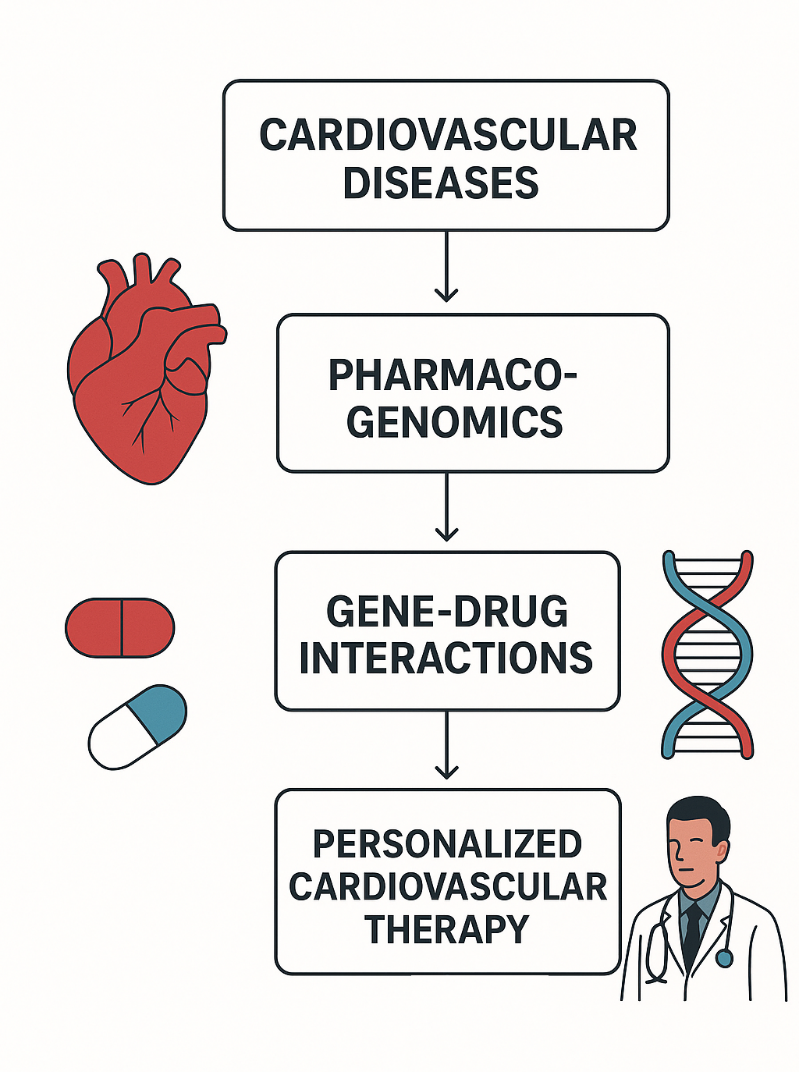
Cardiovascular diseases (CVDs) remain the leading cause of morbidity and mortality worldwide, posing a persistent challenge to global health systems. Despite significant advancements in drug discovery and therapeutic interventions, interindividual variability in drug response continues to limit treatment efficacy and safety. Pharmacogenomics, the science of understanding how genetic variations affect drug response, has emerged as a crucial tool in addressing this variability and advancing personalized cardiovascular therapy. In conditions such as hypertension and heart failure, genetic polymorphisms in drug-metabolizing enzymes, transporters, and molecular targets have been shown to influence therapeutic outcomes and adverse event profiles. Variants in genes such as ADRB1, ADRB2, ACE, AGTR1, and SLC12A3 modulate patient responses to widely used cardiovascular drugs including β-blockers, ACE inhibitors, angiotensin receptor blockers (ARBs), and diuretics. Understanding these gene–drug interactions enables clinicians to tailor pharmacological strategies to an individual’s genetic makeup, improving efficacy while minimizing toxicity. Furthermore, the integration of multi-omics technologies—including transcriptomics, metabolomics, and proteomics—alongside polygenic risk scoring and machine learning–based models is transforming cardiovascular pharmacogenomics from a single-gene focus to a systems-level understanding. These integrative approaches hold the potential to predict not only therapeutic responses but also disease progression and adverse drug reactions in real time. Ultimately, pharmacogenomics is propelling cardiovascular medicine toward a precision-driven era, where treatments are informed by an individual’s unique genetic and molecular profile rather than population averages. This paradigm shift promises more accurate, effective, and safer interventions in the management of CVDs.