Smart Nanocarriers in Cancer Therapy: Multi-Omics Integration and Clinical Translation
DOI:
https://doi.org/10.64474/3107-6726.Vol1.Issue3.5Keywords:
- Smart nanocarriers, Cancer therapy, Multi-omics integration, Stimuli-responsive nanoparticles, Clinical trials, Precision oncology
Abstract
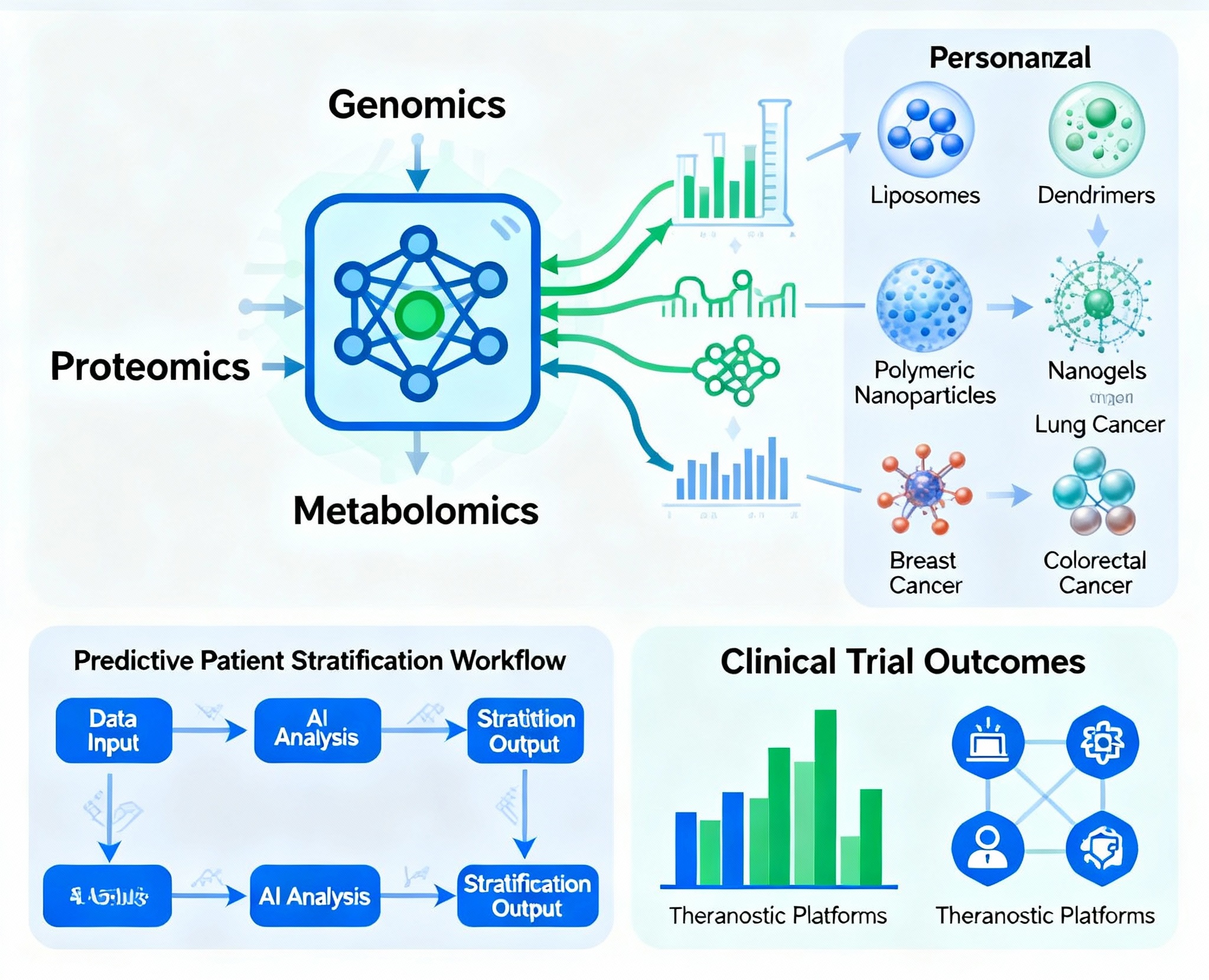
Smart nanocarriers have emerged as transformative tools in cancer therapy, addressing long-standing challenges of systemic toxicity, poor bioavailability, and non-specific drug distribution associated with conventional chemotherapy. Between 2019 and 2024, significant progress has been made in developing stimuli-responsive and targeted nanocarriers including liposomes, polymeric nanoparticles, dendrimers, and inorganic systems engineered to adapt to tumor microenvironmental cues or external triggers. Concurrently, the integration of multi-omics technologies (genomics, transcriptomics, proteomics, and metabolomics) has provided a molecularly informed framework for the rational design of personalized nanomedicines, enabling improved biomarker-driven targeting and predictive therapeutic outcomes.This systematic review consolidates advances in nanocarrier development and clinical translation within this timeframe, highlighting preclinical innovations, omics-guided design strategies, and clinical trials that demonstrate enhanced efficacy and safety profiles. Evidence from early-phase studies reveals improved tumor accumulation, reduced off-target effects, and favorable tolerability across multiple cancer types. However, challenges such as tumor heterogeneity, immune evasion, large-scale manufacturing, and regulatory hurdles continue to limit widespread clinical adoption.Looking forward, the integration of artificial intelligence with omics-based approaches, the development of hybrid and biomimetic nanomaterials, and the design of theranostic platforms are expected to accelerate translation from bench to bedside. By uniting smart nanocarriers with precision oncology, the field is poised to deliver patient-specific, adaptable therapies that redefine the landscape of cancer treatment.