Clinical Translation of Nanomedicine in Oncology: Advances, Challenges, and Future Directions in Hepatic, Renal, Breast, and Brain Malignancies
DOI:
https://doi.org/10.64474/3107-6726.Vol1.Issue3.3Keywords:
- Nanomedicine, Oncology, Clinical Trials, Liposomes, Polymeric Nanoparticles, Hepatic Cancer, Renal Cancer, Breast Cancer, Brain Cancer, Targeted Therapy, Theranostics
Abstract
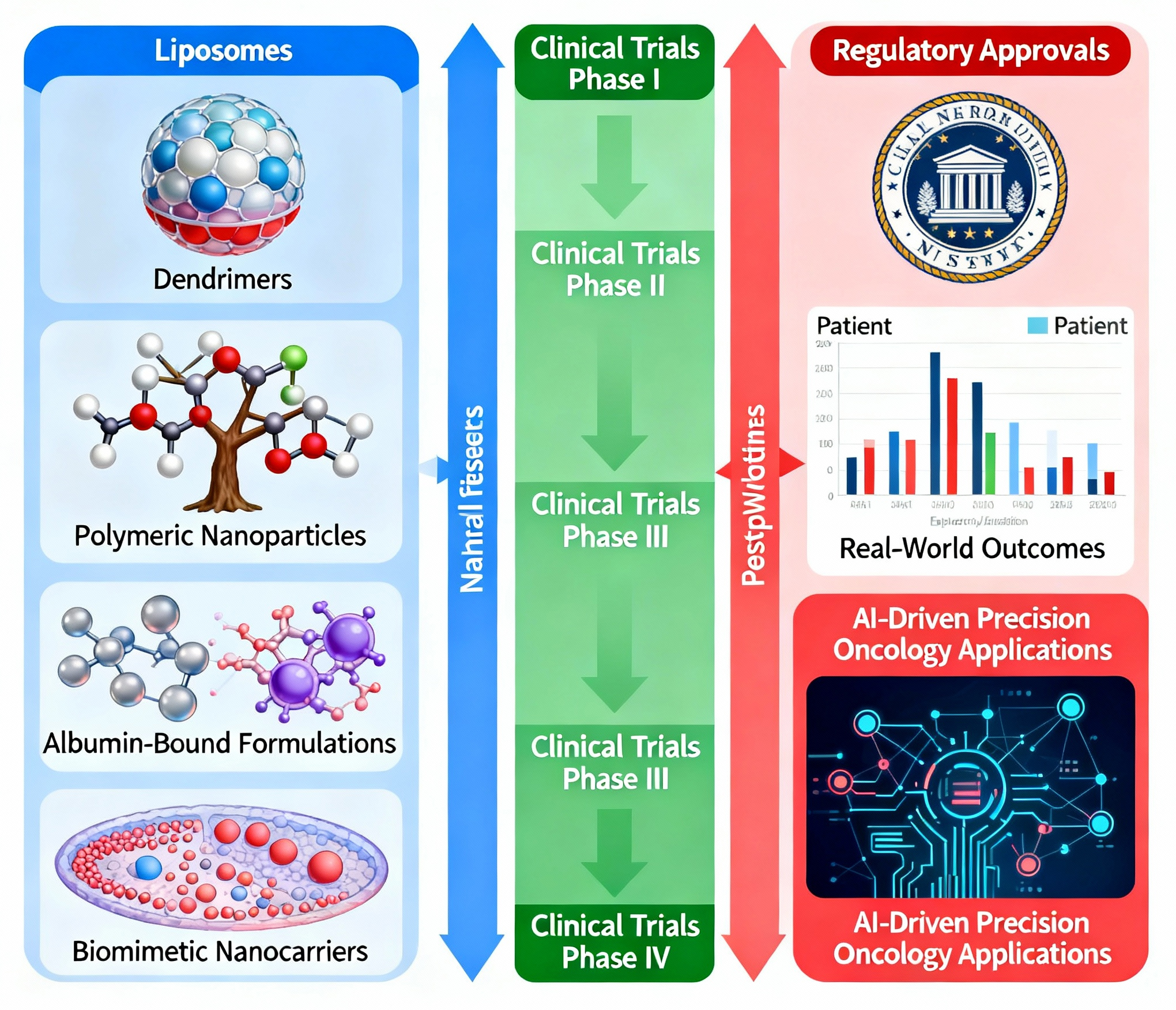
Nanomedicine has emerged as a transformative approach in oncology, offering the potential to enhance therapeutic efficacy, minimize systemic toxicity, and enable precision diagnostics. This systematic review synthesizes evidence from ongoing and completed clinical trials investigating nanomedicine platforms including liposomes, polymeric nanoparticles, micelles, dendrimers, inorganic nanocarriers, and biomimetic systems across four major malignancies: hepatic, renal, breast, and brain cancers. Data were extracted from ClinicalTrials.gov, PubMed, Embase, and WHO ICTRP following PRISMA guidelines, with inclusion limited to Phase I–III interventional trials. Breast cancer demonstrated the greatest clinical translation, supported by regulatory approvals for liposomal doxorubicin, albumin-bound paclitaxel, and polymeric micelles, which showed improved safety and survival outcomes compared to conventional therapies. In hepatic and renal malignancies, nanomedicine trials highlighted advances in tumor-specific targeting, improved drug tolerability, and innovative theranostic platforms, though confirmatory Phase III survival benefits remain limited. For brain tumors, particularly glioblastoma, novel nanocarriers demonstrated enhanced blood–brain barrier penetration and favorable tolerability, yet translation remains constrained by small-scale, early-phase studies. Across all malignancies, persistent challenges include heterogeneous pharmacokinetics, immunogenicity, manufacturing complexity, and regulatory ambiguity. Despite these hurdles, advances in multifunctional and personalized nanomedicine, integration with immunotherapy, and adoption of theranostic platforms underscore the growing translational promise of nanotechnology in oncology. This review highlights both the achievements and limitations of current clinical trials, while outlining future strategies necessary for advancing nanomedicine from bench to bedside.