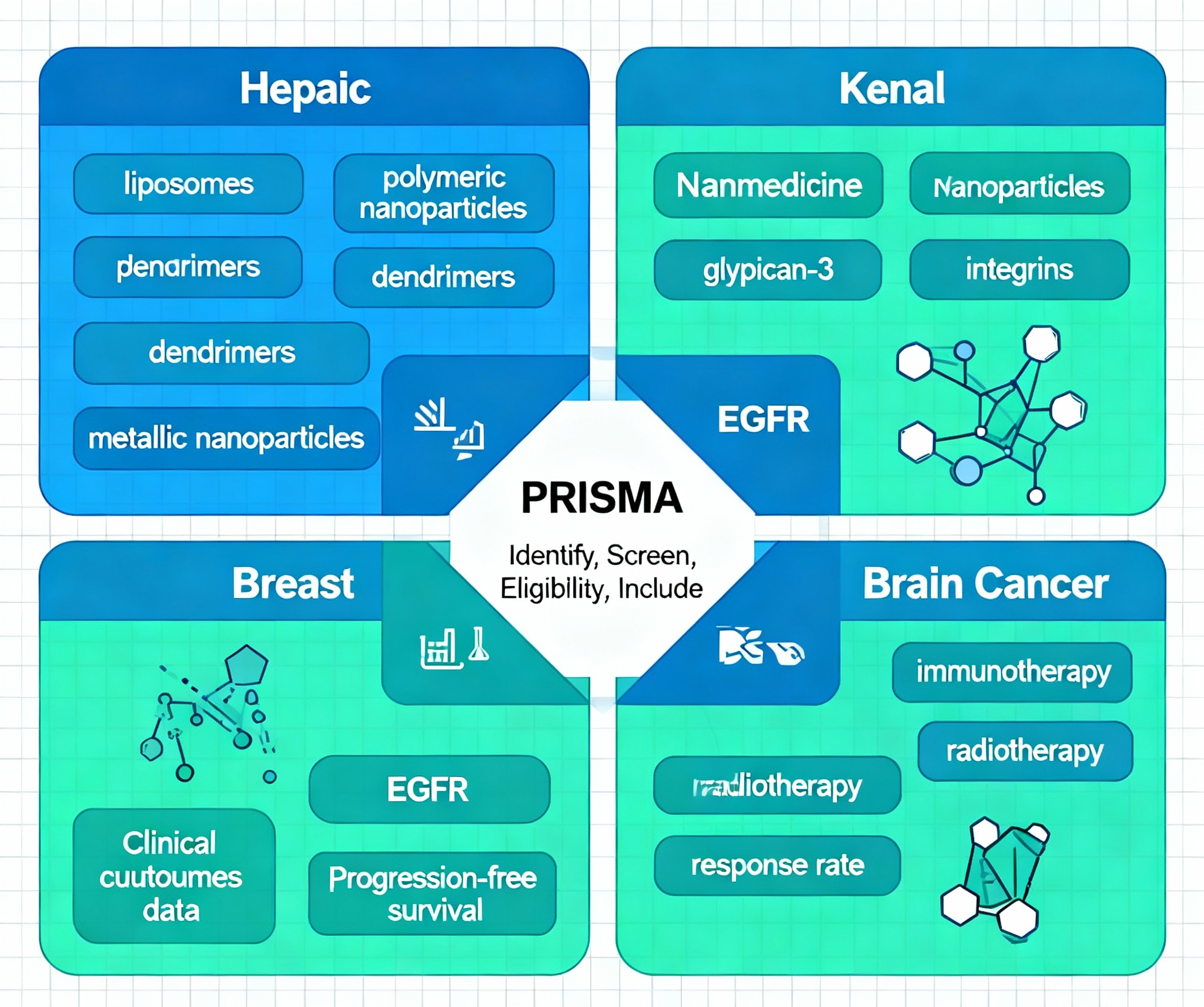
Nanomedicine in Oncology: A Systematic Review and Comparative Analysis of Clinical Efficacy in Breast, Liver, Renal, and Neuro Cancers
DOI:
https://doi.org/10.64474/3107-6726.Vol1.Issue3.1Keywords:
- Nanomedicine, Cancer Therapy, Breast Cancer, Liver Cancer, Renal Cancer, Neuro-oncology, Clinical Trials, Drug Delivery, Theranostics
Abstract
Background: Nanotechnology has rapidly reshaped the therapeutic landscape of oncology, offering innovative drug delivery platforms that overcome many limitations of conventional chemotherapy. By leveraging nanoscale carriers such as liposomes, polymeric nanoparticles, and gold nanoshells, recent clinical trials have demonstrated measurable gains in efficacy, safety, and precision targeting. Methods: A systematic review was conducted following PRISMA guidelines to identify, evaluate, and synthesize clinical trial data on nanomedicine-based therapies in breast, liver, renal, and neuro cancers from 2020 to 2025.Results: Nanomedicines achieved consistent improvements in therapeutic outcomes across cancer types. Breast cancer trials demonstrated the greatest efficacy gains, with Abraxane improving progression-free survival by 18% compared to conventional taxanes. Neuro-oncology showed a 15% improvement through blood brain barrier permeable nanoparticles and photothermal therapies, representing a major breakthrough in a previously treatment-refractory domain. Liver cancer nanomedicines, such as liposomal sorafenib, delivered a 12% gain in tumor response while reducing systemic toxicity, whereas renal cancer nanotherapies achieved 9% improved disease control with reduced nephrotoxicity. Conclusion: Nanomedicine is no longer an experimental adjunct but a transformative pillar in modern oncology. By improving survival, reducing toxicity, and enabling precision delivery, nanomedicines hold the potential to redefine cancer care. However, achieving widespread clinical adoption will require large multicenter trials, harmonized regulatory frameworks, and sustainable production pipelines